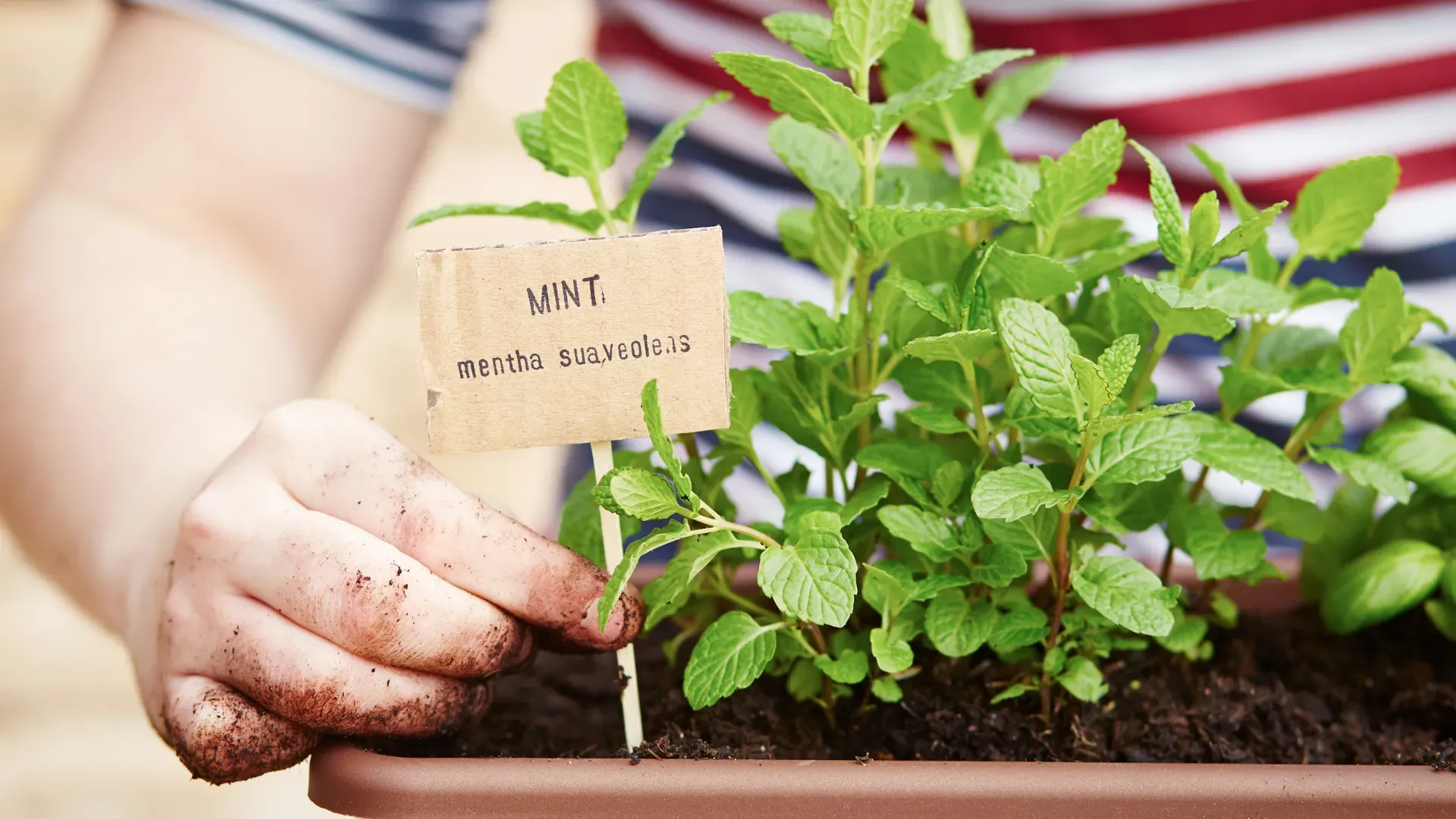
Exploring 20 unique mint varieties
Many people are familiar with the common spearmint and peppermint, but the world of mint is incredibly diverse. Did you know there are about 7,000 species in the Lamiacee family (also known as the mint family) and around 30 in the Mentha genus (true mint), each with their own unique characteristics? Some are natural, while others are hybrids that have been bred for specific tastes. In this blog, we explore 20 popular mint varieties and what sets them apart!
1. Curly Spearmint (Mentha spicata ‘Crispa’)
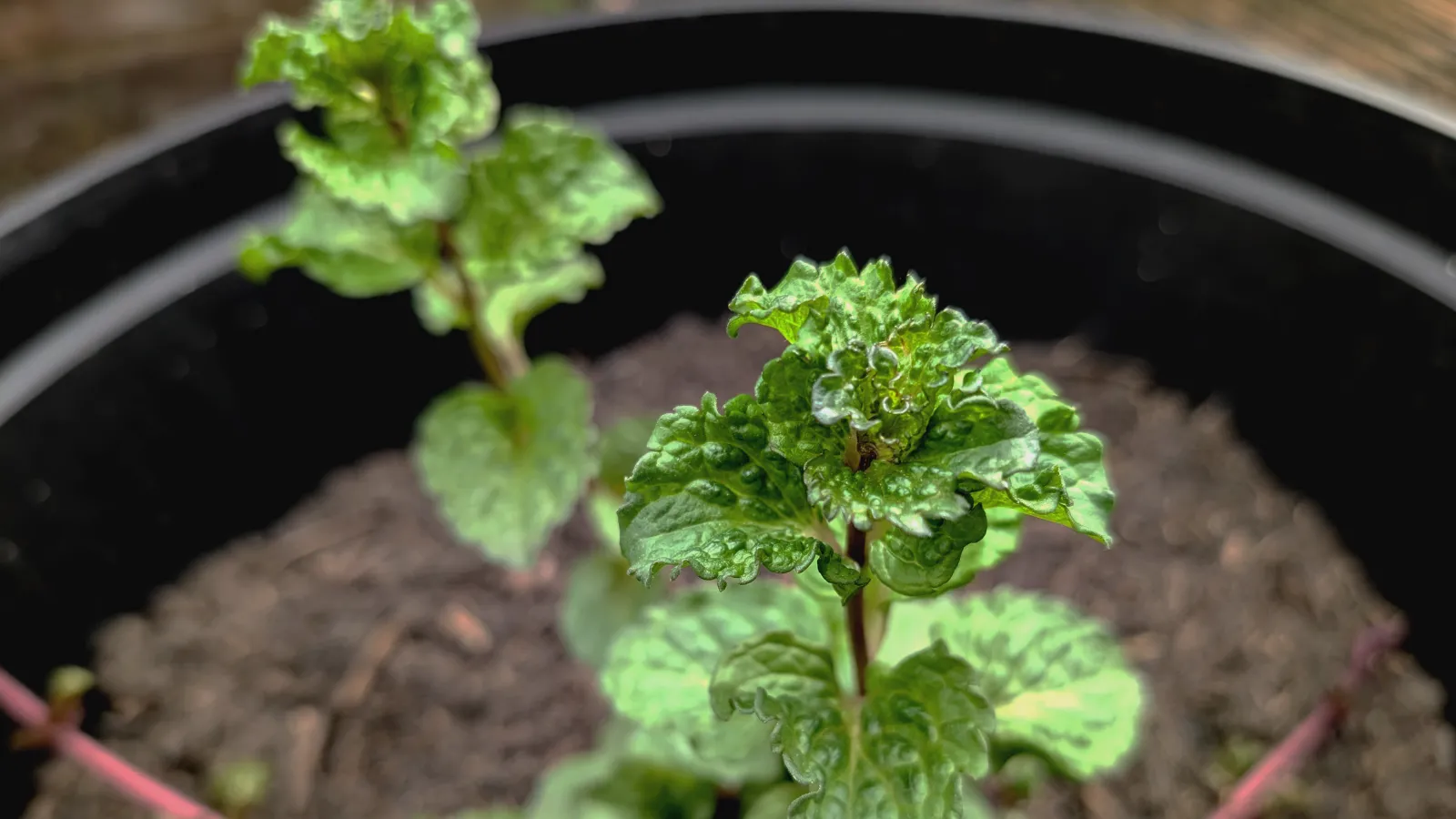
Spearmint is perhaps the most widely used type of mint, known for its lovely flavour. Curly spearmint is a distinctive variant of this popular variety, easily recognised by its crinkled, ruffled leaves, offering a more decorative, textured appearance.
Taste: Fresh, sweet, slightly grassy
Flowers: Pale purple
Blends: Pure Mint
2. Peppermint (Mentha × piperita)
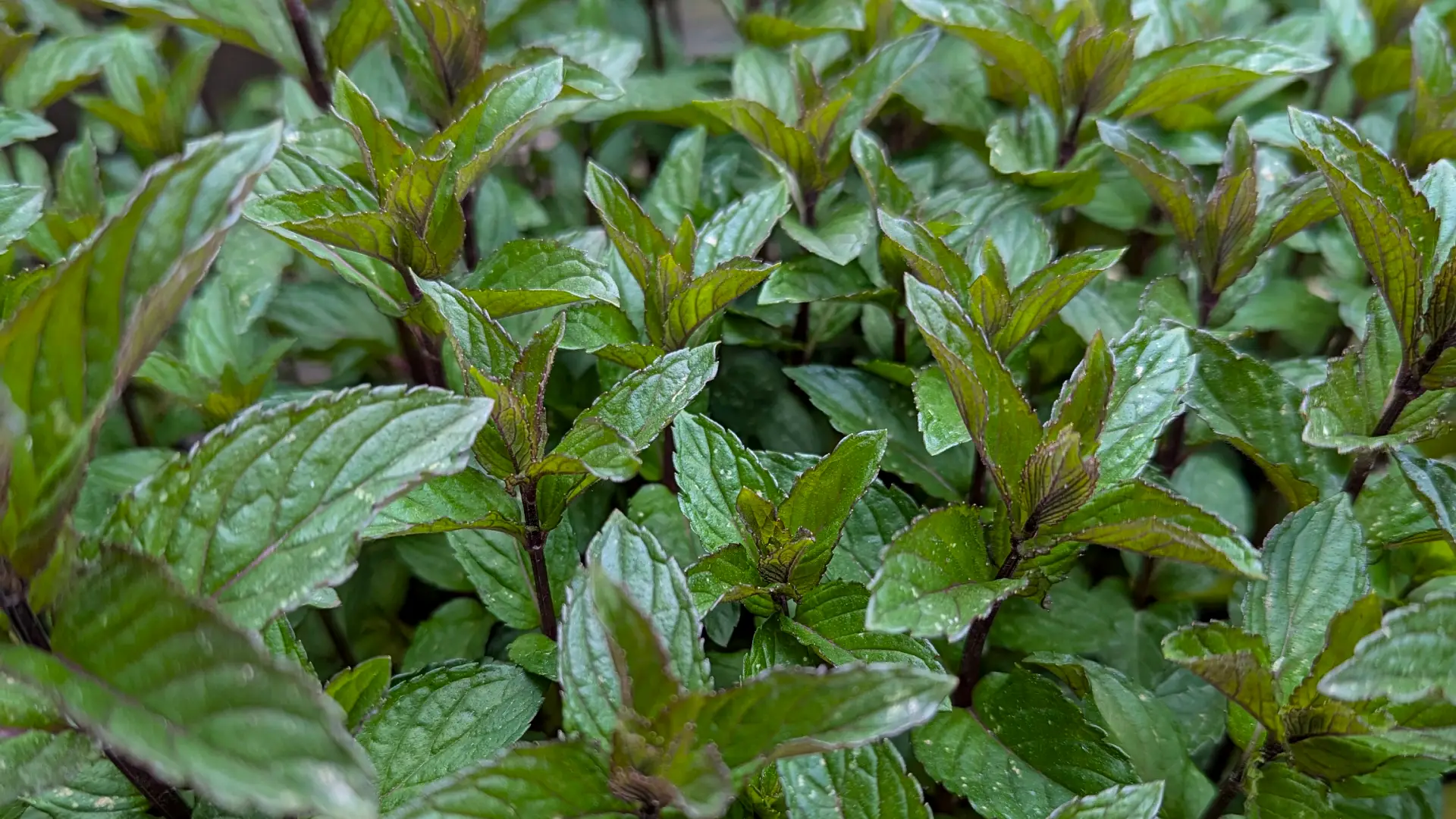
Peppermint is a hybrid of Spearmint and Watermint, with a stronger, more intense flavour. It contains higher levels of menthol, which gives it a powerful cooling sensation. It also has distinctive dark green leaves with purplish stems.
Taste: Strong menthol with a slight bitter sweetness
Flowers: Purple
Blends: Pure Mint, Berry Floral, Spiced Fruit, and Chocolate Orange
3. Chocolate Mint (Mentha × piperita ‘Chocolate’)
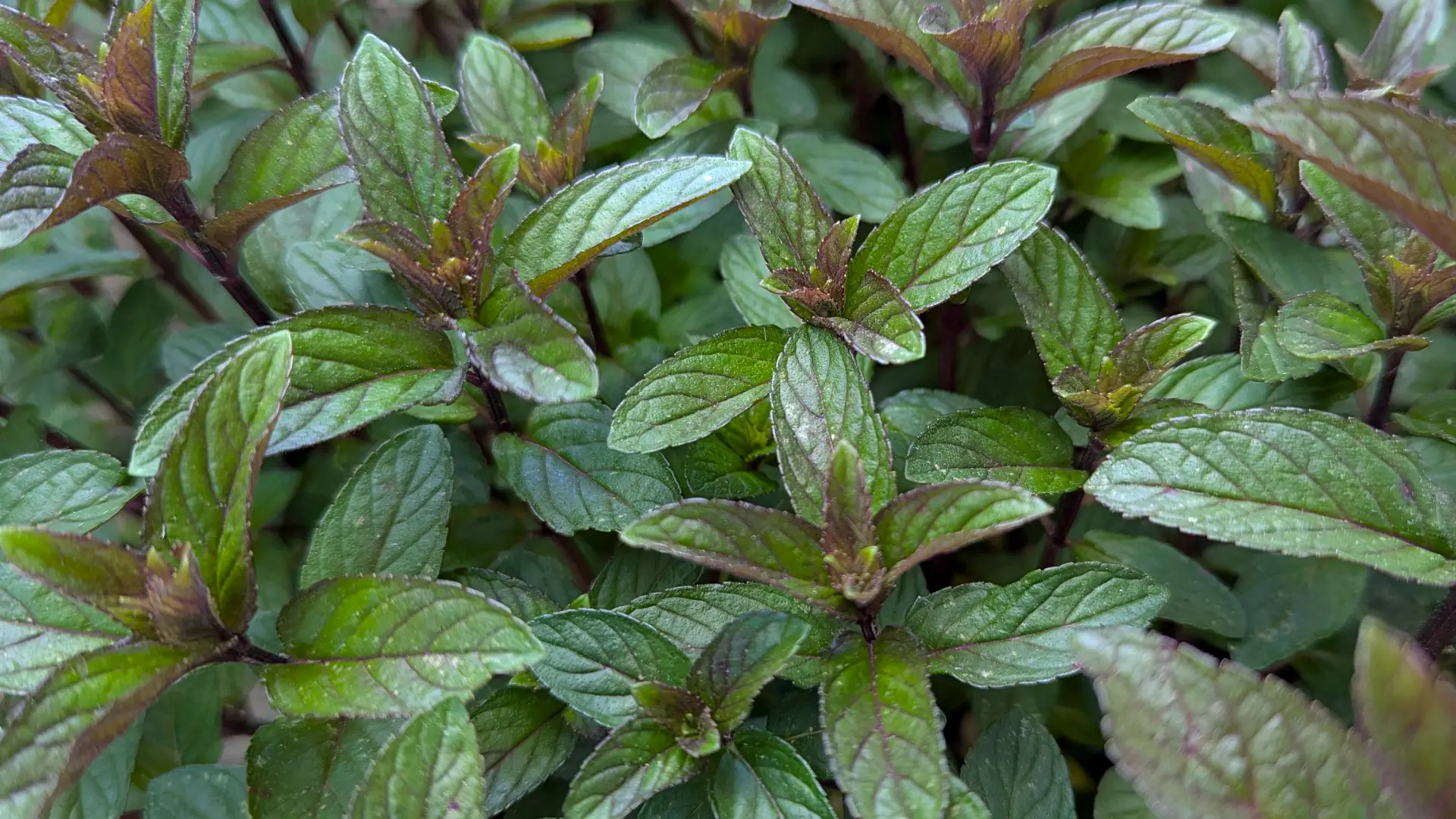
As the name suggests, Chocolate mint has a delightful chocolatey aroma. The “chocolate” scent comes from natural aromatic oils in the plant, particularly menthol and other terpenes. This variety has an appearance similar to Peppermint, but with slightly shinier leaves and burgundy stems.
Taste: Peppermint and citrus, with a cocoa note
Flowers: Lavender blue
Blends: Chocolate Orange
4. Banana Mint (Mentha arvensis ‘Banana’ - informal)
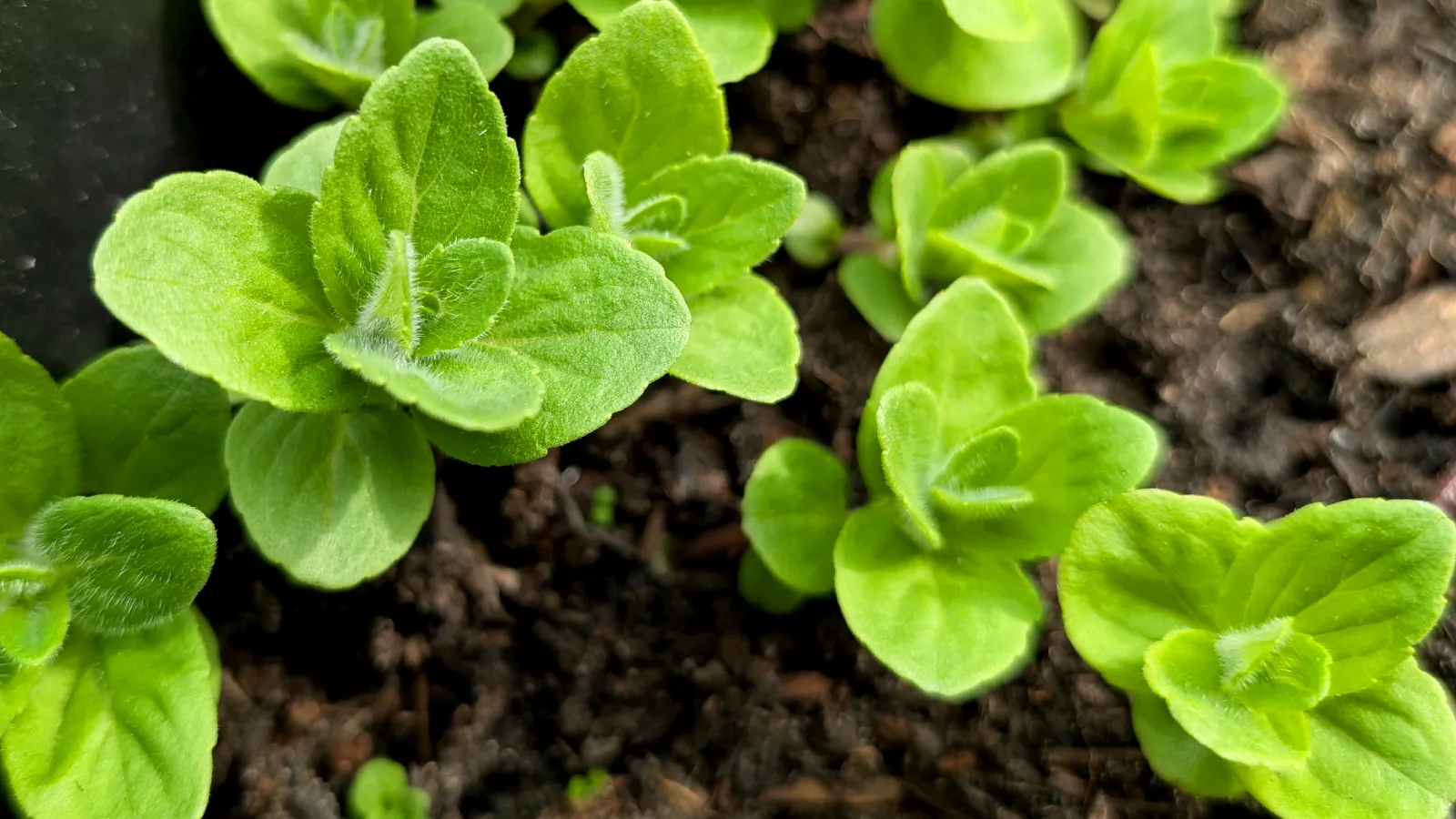
Banana mint is milder than most other mints. This variety has smooth and small leaves that stand out due to their bright, light green colour and compact growth.
Taste: Bittersweet, grassy and faintly reminiscent of bananas
Flowers: Soft lilac
Blends: Tropical
5. Lime Mint (Mentha × piperita ‘Lime’)
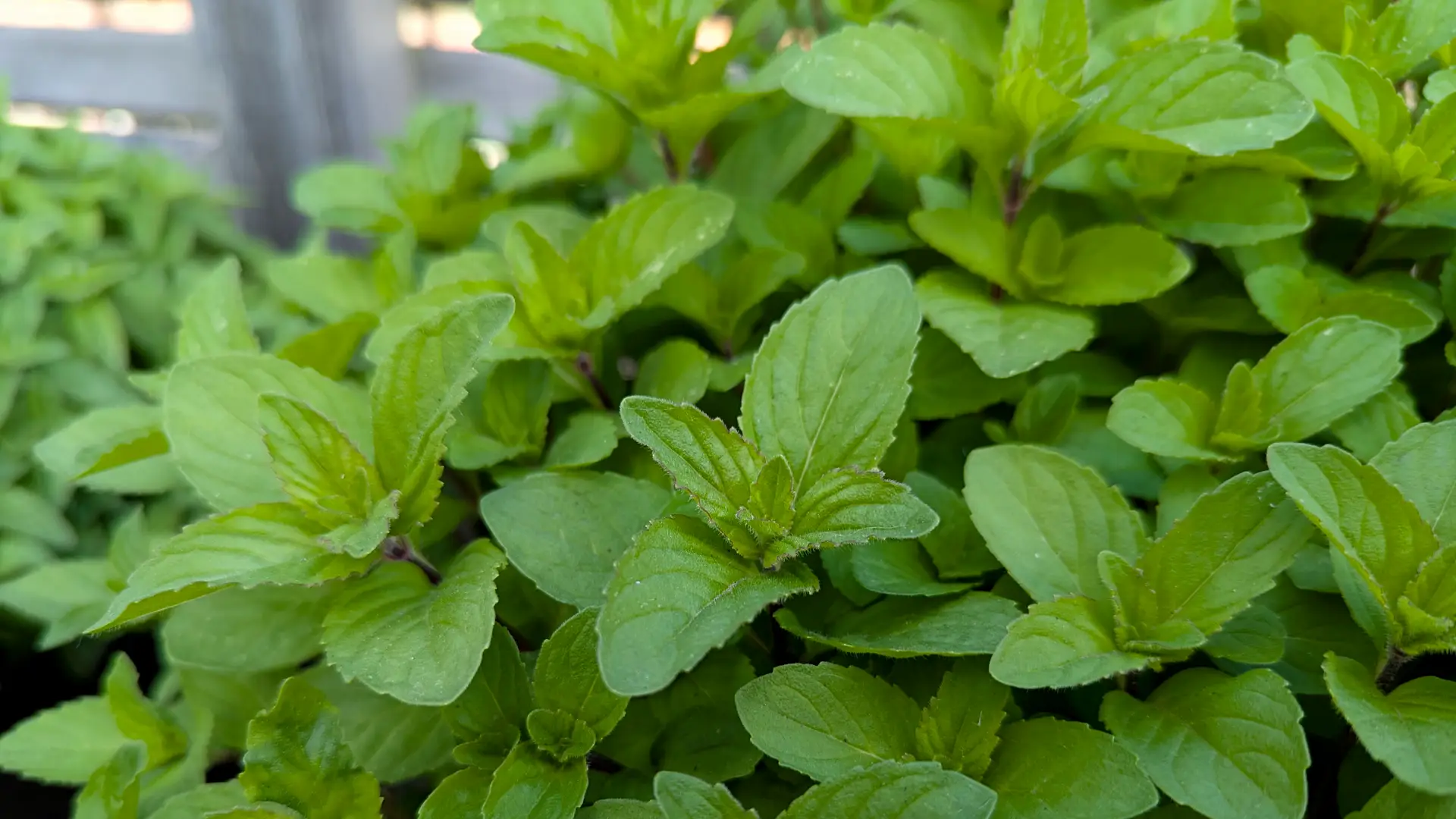
Lime mint also has a slightly more compact growth habit with smaller, light green leaves. It belongs to the Eau de Cologne mint group, which features distinctive flavours that come from a high content of citrus-scented essential oils, particularly linalool and limonene.
Taste: Tart, cool and slightly citrusy
Flowers: Soft purple
Blends: Sweet Citrus
6. Orange Mint (Mentha × citrata ‘Orange’)
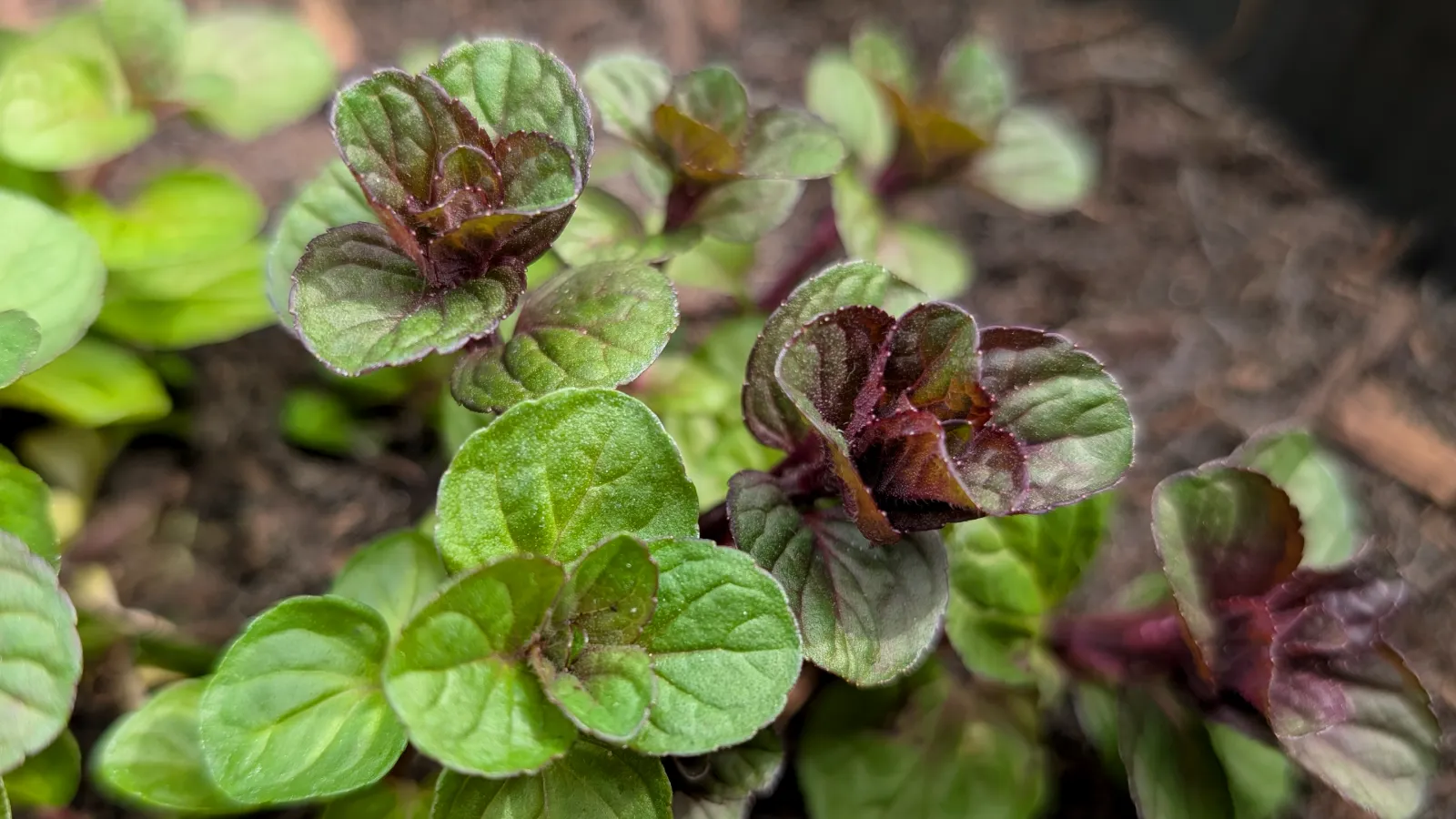
Orange mint, sometimes known as Bergamot mint, offers a surprisingly intense orange-like flavour. It has tinted, oval-shaped leaves, and its vibrant scent makes it a favourite among pollinators.
Taste: Sharp citrus and slightly floral
Flowers: Mauve
Blends: Chocolate Orange
7. Strawberry Mint (Mentha spicata ‘Strawberry’ - informal)
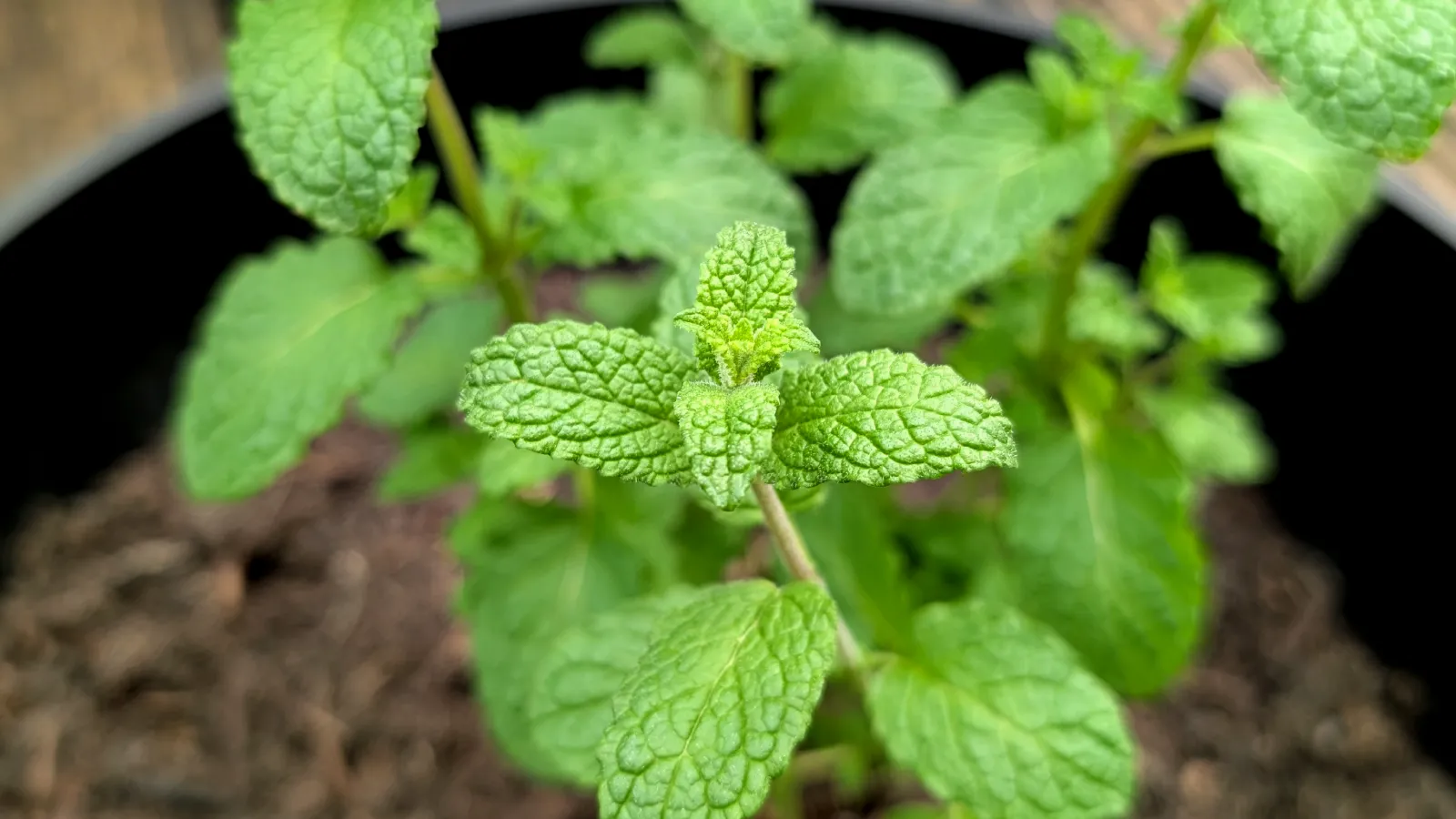
Strawberry mint comes from the Spearmint family and gets its unique fragrance from higher levels of linalool and methyl acetate. It also has reddish stems and smaller, slightly fuzzy leaves that are more delicate than those of other varieties.
Taste: Fruity and sweet, reminiscent of strawberries
Flowers: Light purple
Blends: Tropical
8. Ginger Mint (Mentha × gracilis)
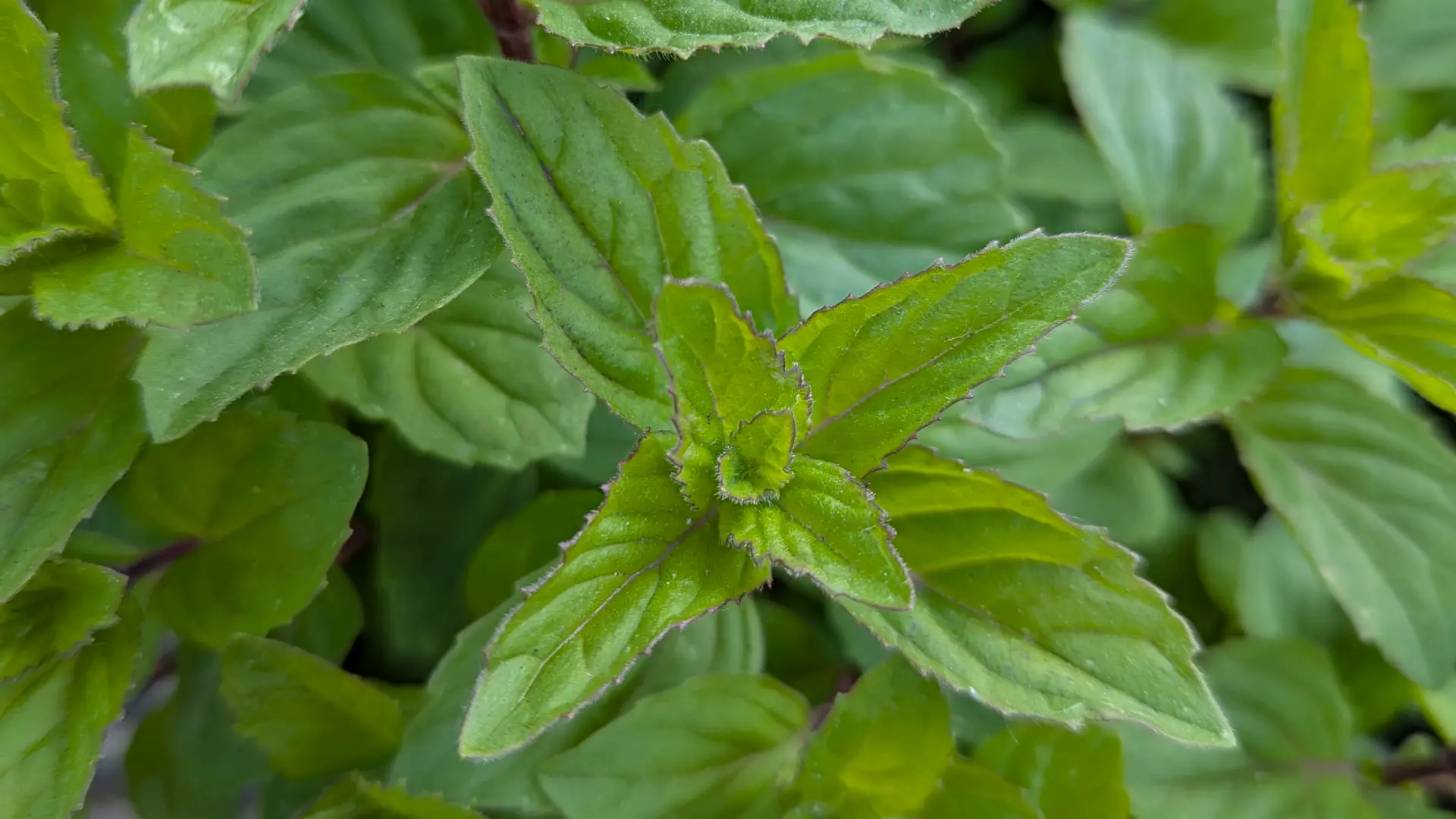
Ginger mint is generally known for having variegated foliage, with light green leaves streaked in yellow and accented by subtle reddish stems, although it can also have solid green leaves on occasion. It’s a natural hybrid of Spearmint and Cornmint.
Taste: Spicy with a hint of citrus
Flowers: Pale purple
Blends: Spiced Fruit
9. Moroccan Mint (Mentha spicata var. crispa ‘Moroccan’)
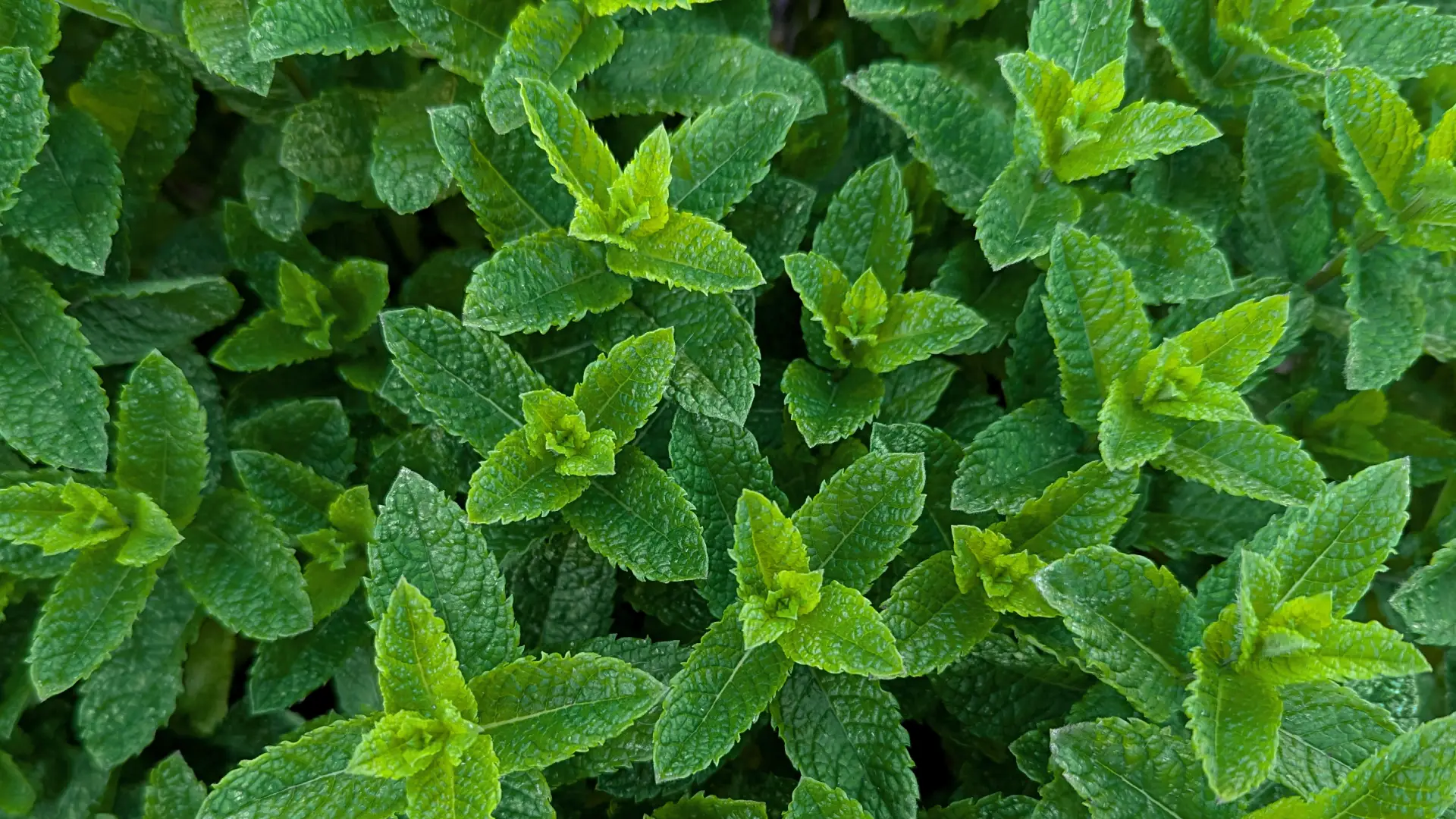
Moroccan mint is a bold variety prized for its intensely sweet flavour and refreshing aroma. Its bright green leaves feature pointed, sharply defined edges. Traditionally used in Moroccan mint tea, these leaves are brewed with green tea and sugar, and the resulting infusion is served as a symbol of hospitality.
Taste: Bold spearmint and sweet sugar
Flowers: Light pinkish purple
Blends: Sweet Citrus and Pure Mint
10. Pineapple Mint (Mentha suaveolens ‘Variegata’)
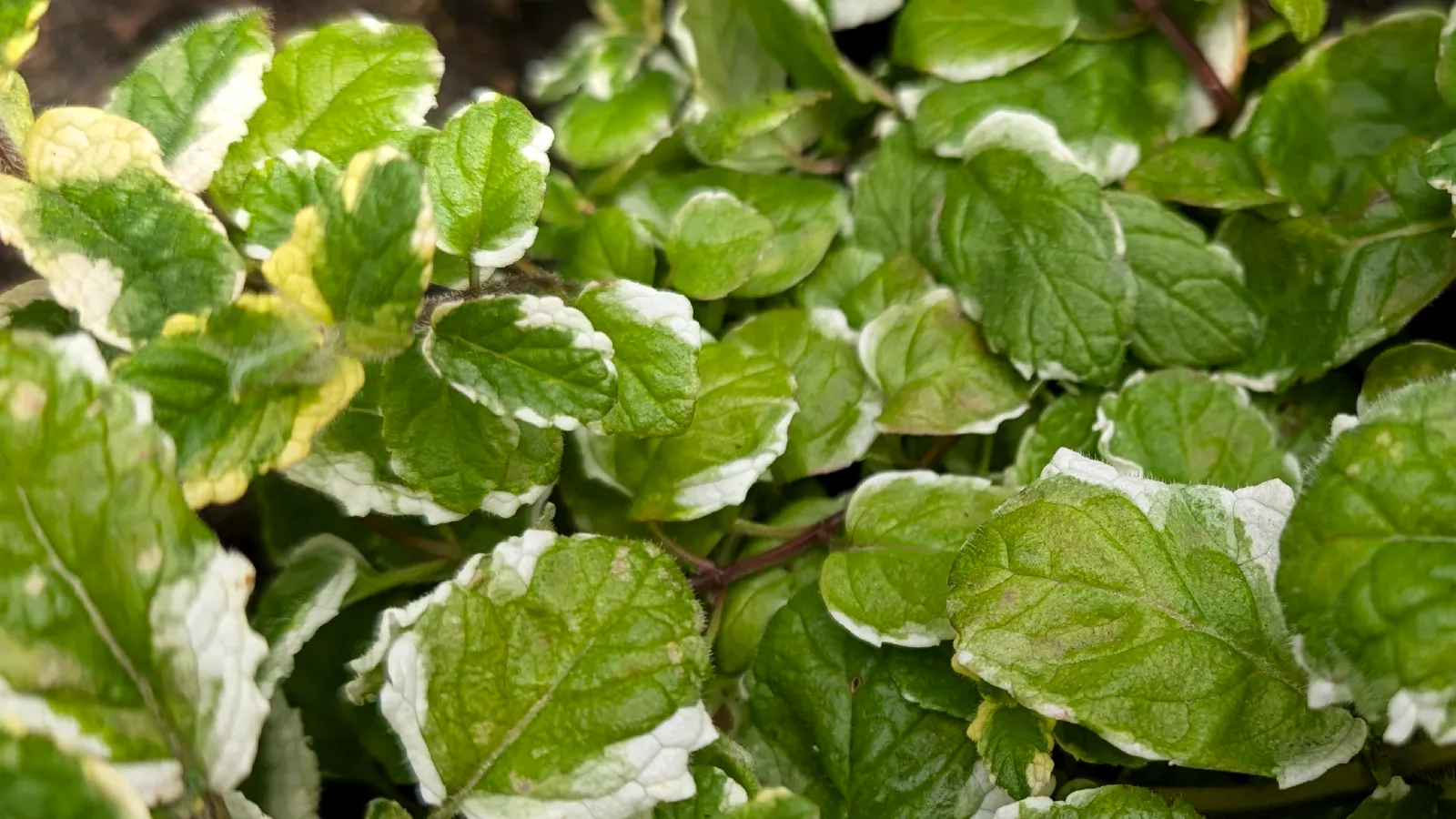
Pineapple mint is a striking variety known for its distinctive, elegant look. Its fuzzy, rounded leaves are a pale green with creamy white edges, giving the plant a fresh, tropical appearance. It also tends to grow a bit slower and more spread out than some other varieties.
Taste: Mild, sweet mint with a hint of pineapple
Flowers: Pinkish white
Blends: Tropical
11. Apple Mint (Mentha suaveolens ‘Apple’)
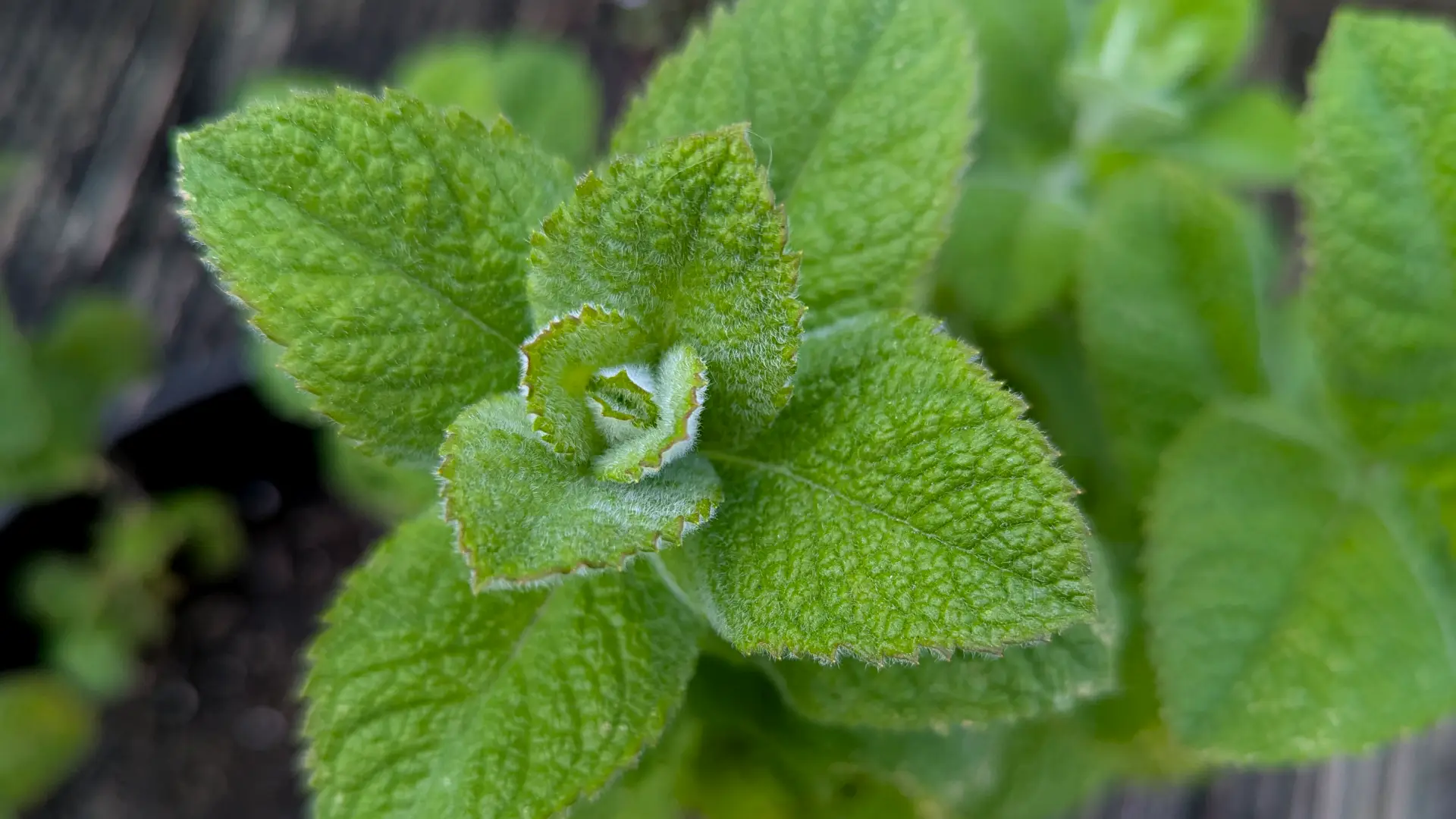
Apple mint is very well-known and loved for its large, rounded leaves that are typically soft green with a silvery tone. The leaves also have a fun, fuzzy texture. This variety tends to grow taller than the others.
Taste: Minty sweet with crisp, green apple undertones
Flowers: White
Blends: Spiced Fruit
12. Berries & Cream Mint (Mentha × piperita ‘Berries & Cream’ - informal)
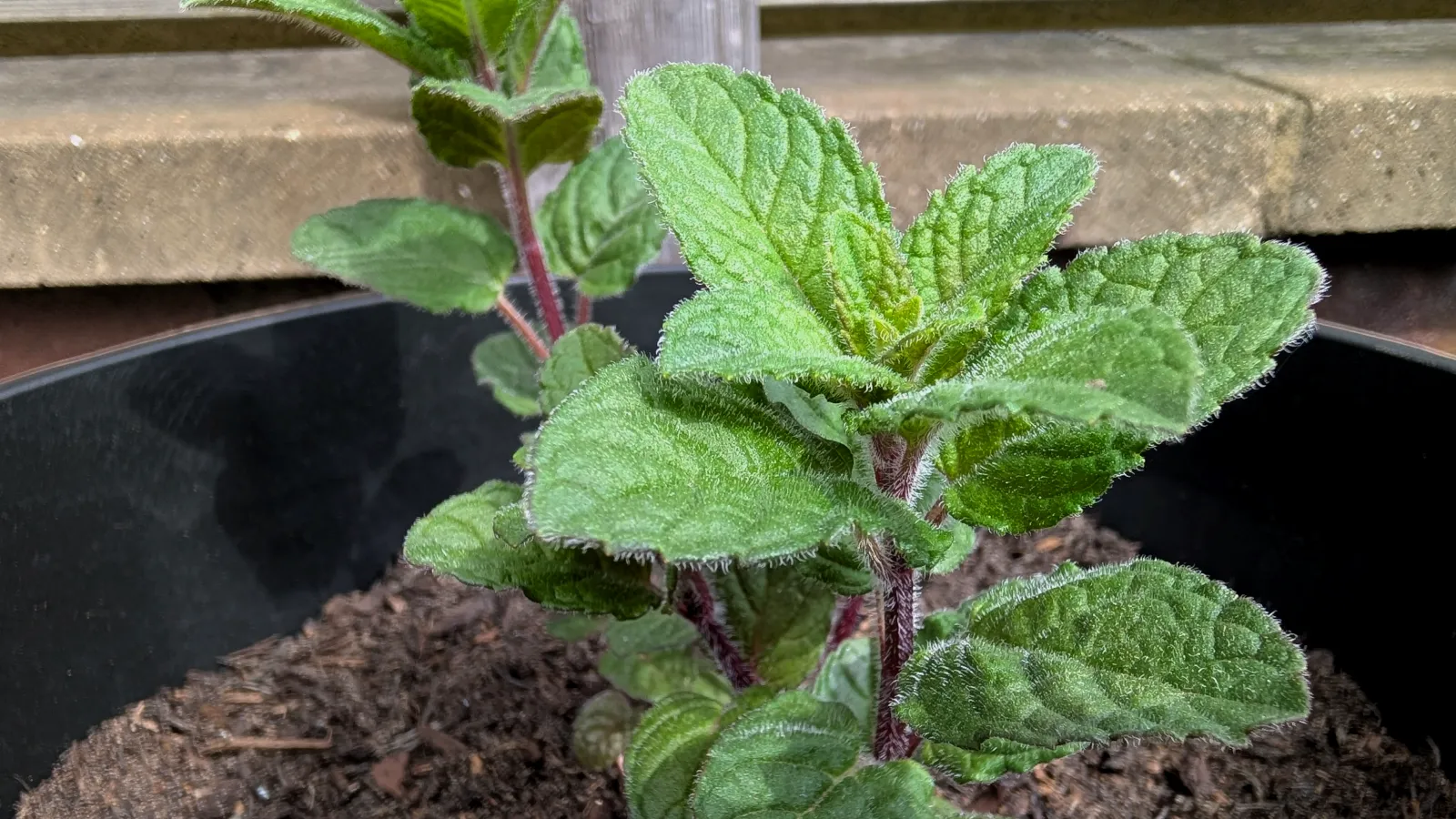
Berries and cream mint is a more recent and wonderfully unique variety, with dark, glossy or fuzzy green leaves that feature a purple tint. Its amazing scent profile is a result of the plant’s blend of natural volatile oils, making it produce a hint of vanilla when you crush the leaves.
Taste: Sweet berry with creamy, vanilla-like notes
Flowers: Mauve
Blends: Berry Floral
13. Blackcurrant Mint (Mentha × piperita ‘Blackcurrant’ - informal)
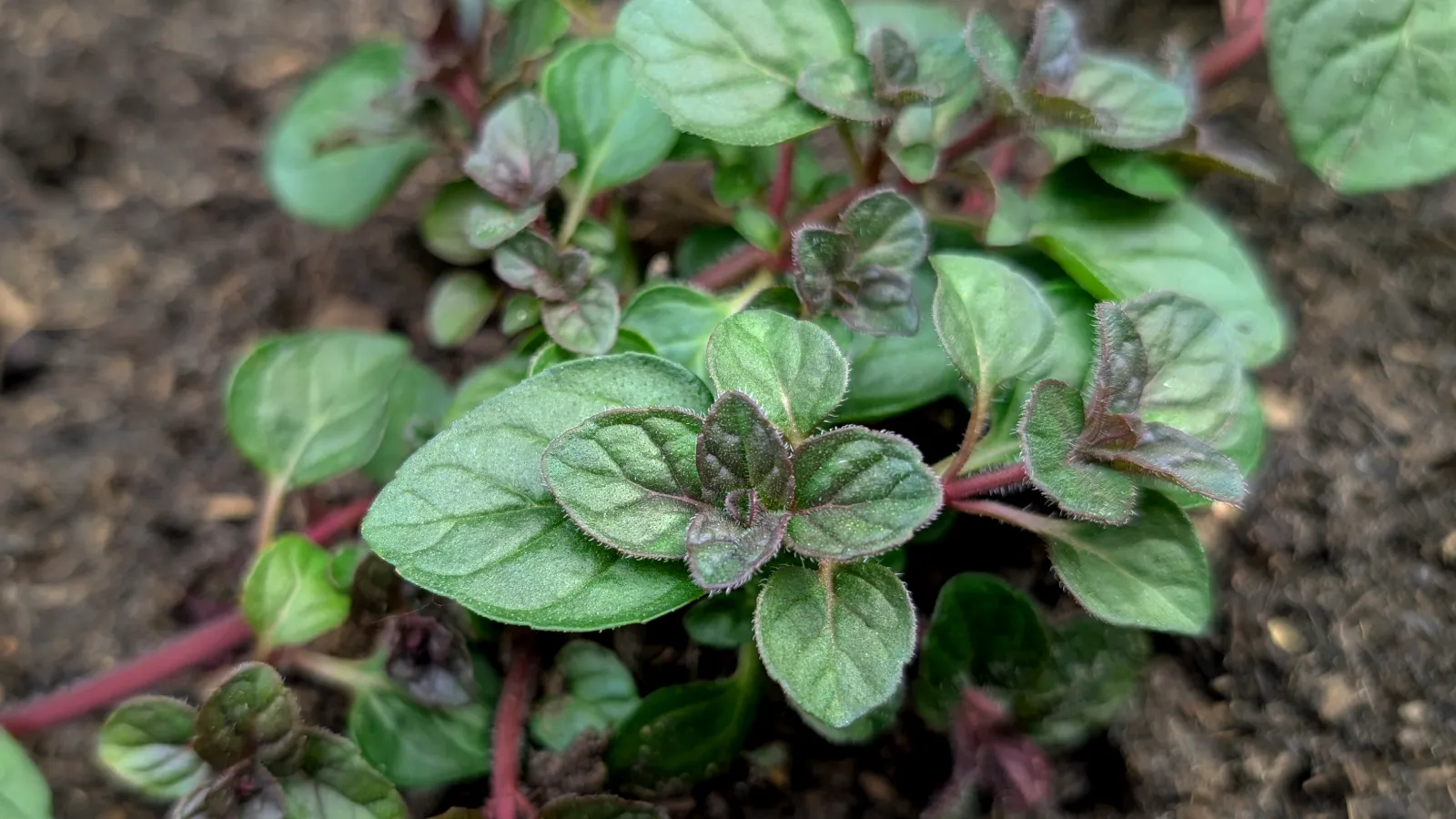
Blackcurrant mint is a compact and very aromatic plant. Interestingly, this variety contains subtle anthocyanins, the same pigments found in blackcurrants, which give its leaves a slight purplish tint and fruity aroma.
Taste: Subtle tartness, reminiscent of blackcurrant
Flowers: Purple
Blends: Berry Floral
14. Lavender Mint (Mentha × piperita ‘Lavender’)
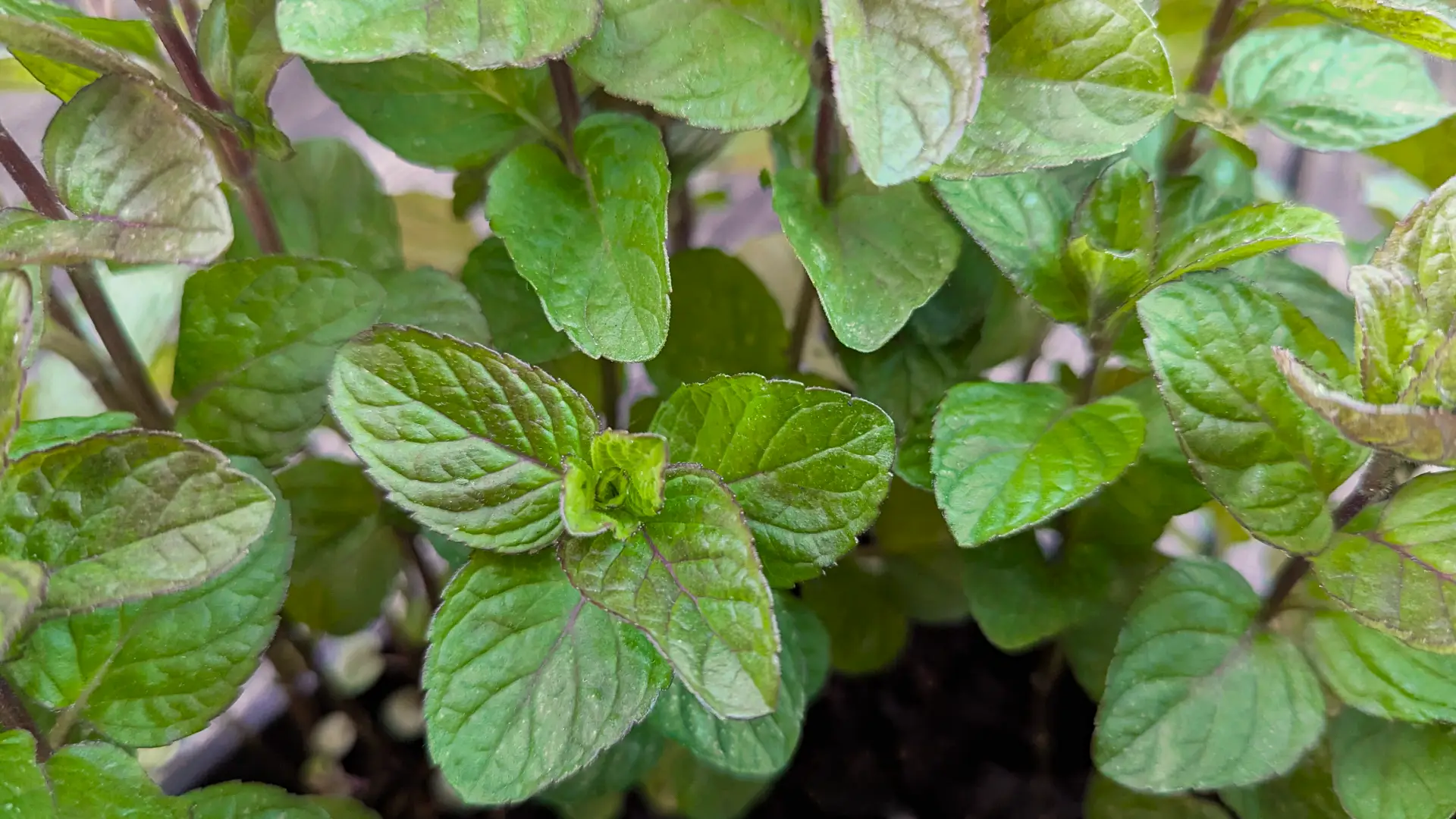
Lavender mint is a charming variety that has oval leaves with a slight hint of reddish silver at the edges. Its lavender-like smell makes it soothing and relaxing when added to teas.
Taste: Mild mint with a floral essence
Flowers: Soft lavender
Blends: Berry Floral
15. Basil Mint (Mentha × piperita ‘Basil’)
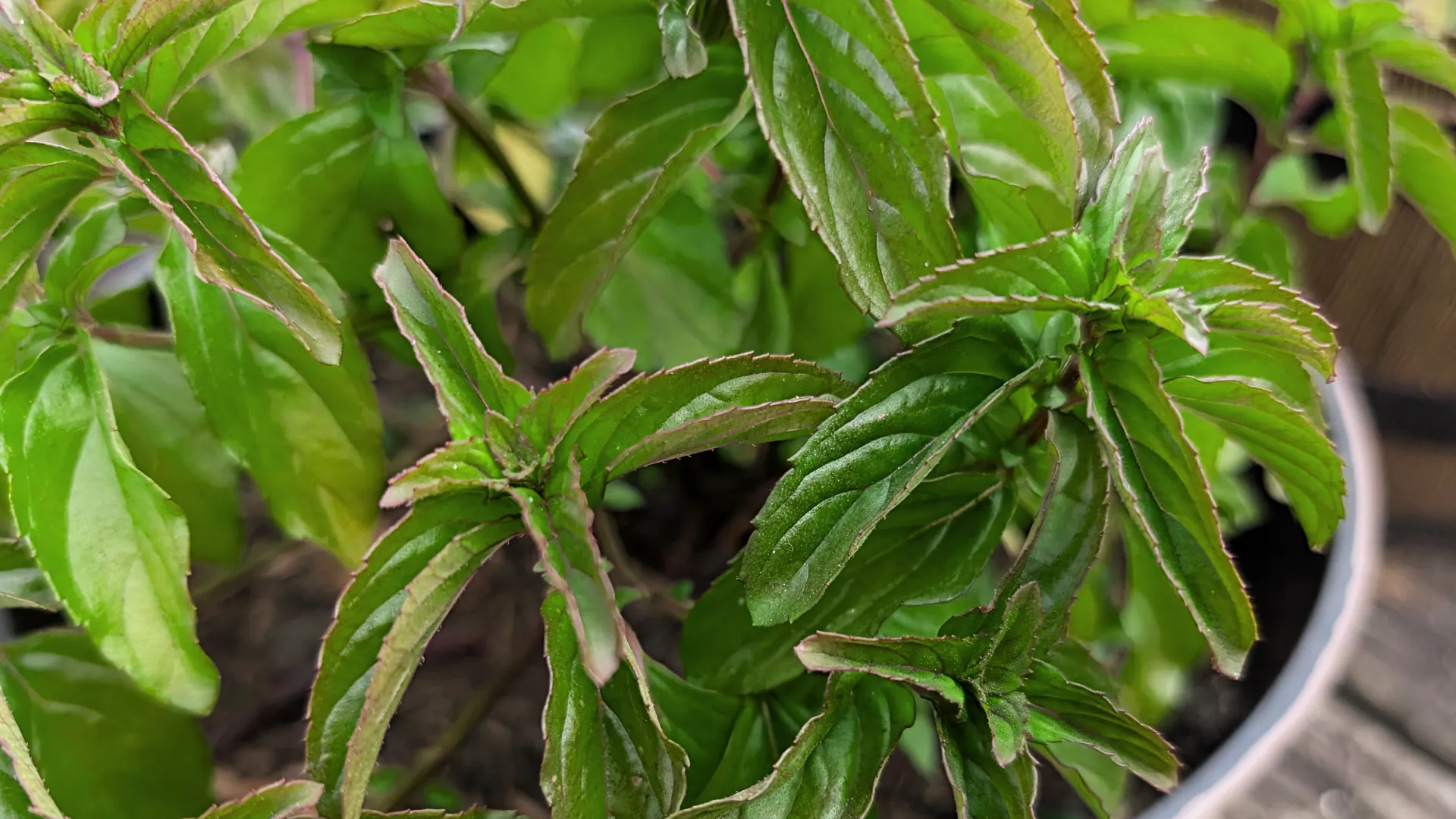
Basil mint is a unique hybrid that offers a striking blend of spicy basil and cool mint flavours. Its leaves are slightly larger and more folded than other mints, with a deep green colour, reddish highlights, and glossy texture.
Taste: Spicy basil with fresh mint undertones
Flowers: Pale lilac
Blends: Chocolate Orange
16. Mojito Mint (Mentha × villosa)
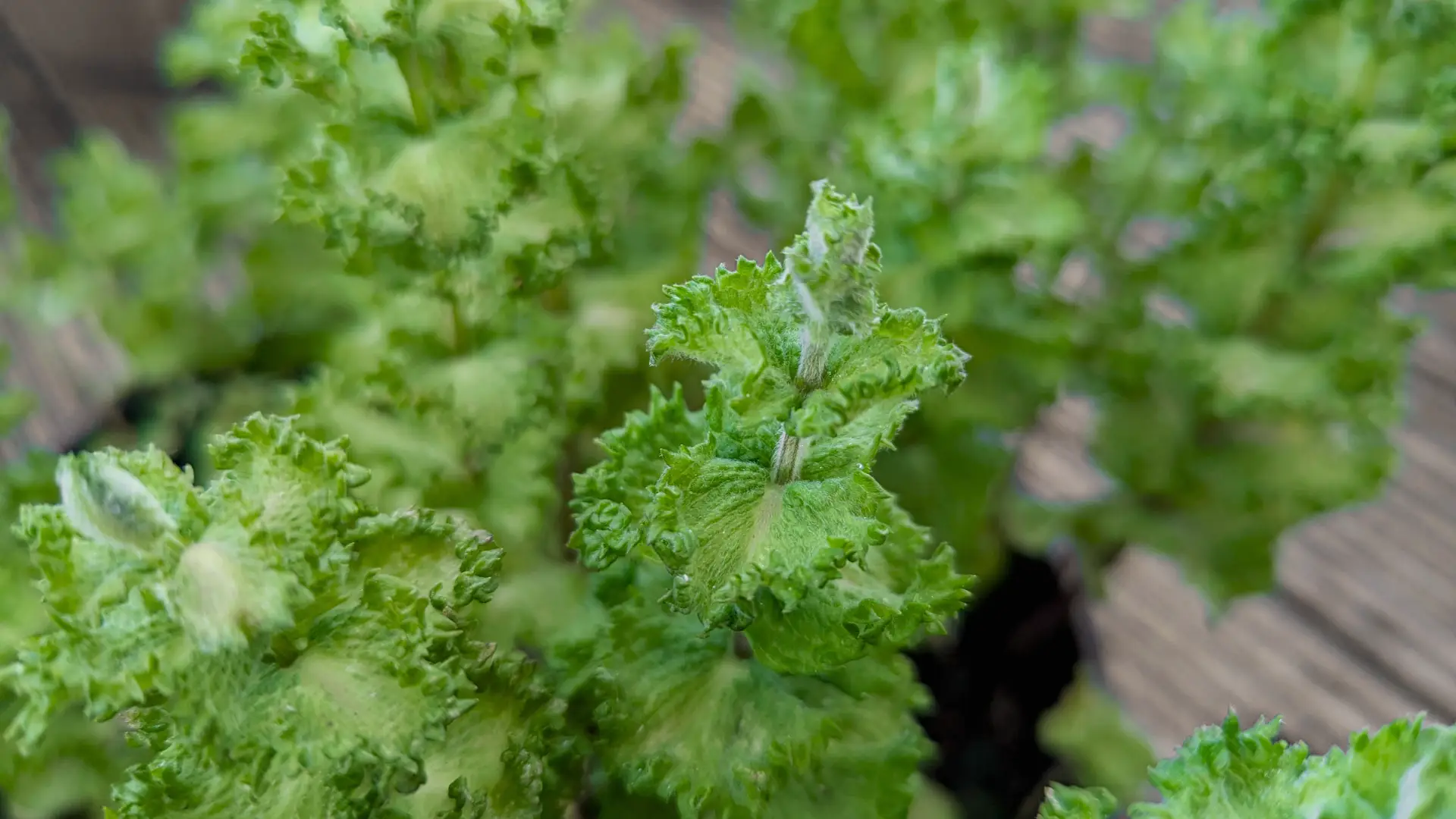
Mojito mint is famous for its classic Cuban mojito cocktail flavour. It has wrinkled, light green leaves with a silver tone and slightly fuzzy texture. It’s mostly grown and used for cocktails, especially mojitos, but also tastes great in teas!
Taste: Cool, fresh mint with a lime note
Flowers: Pinkish white
Blends: Tropical
17. Pear Mint (Mentha × piperita ‘Pear’)
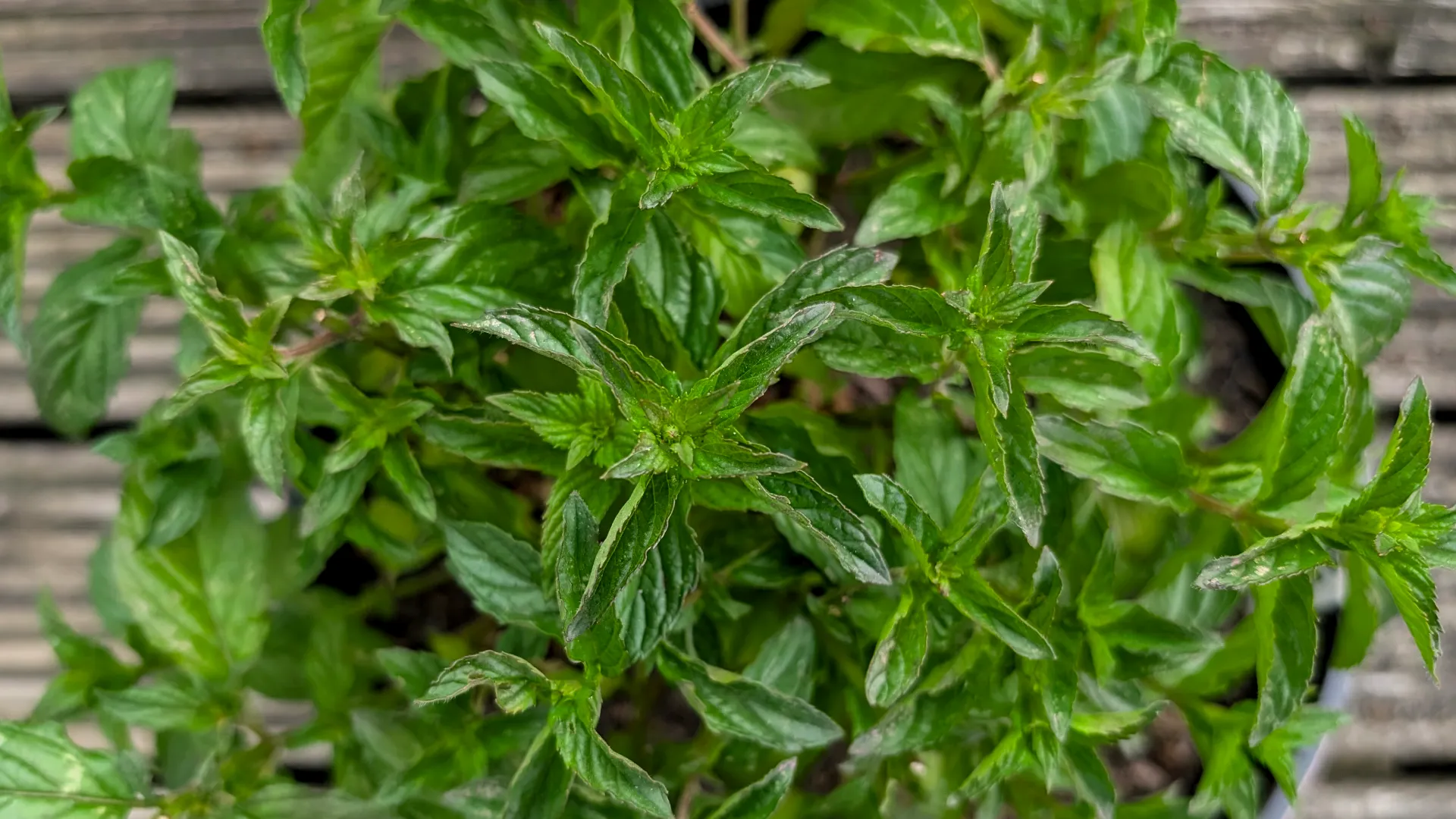
Pear mint has a delicate pear-like quality to it. The leaves are smooth, folded, and a deep green shade. It’s also known to be slightly less invasive than its counterparts.
Taste: Mild mint with a faint pear flavour
Flowers: Lilac
Blends: Spiced Fruit
18. Lemon Mint (Mentha × piperita ‘Lemon’)
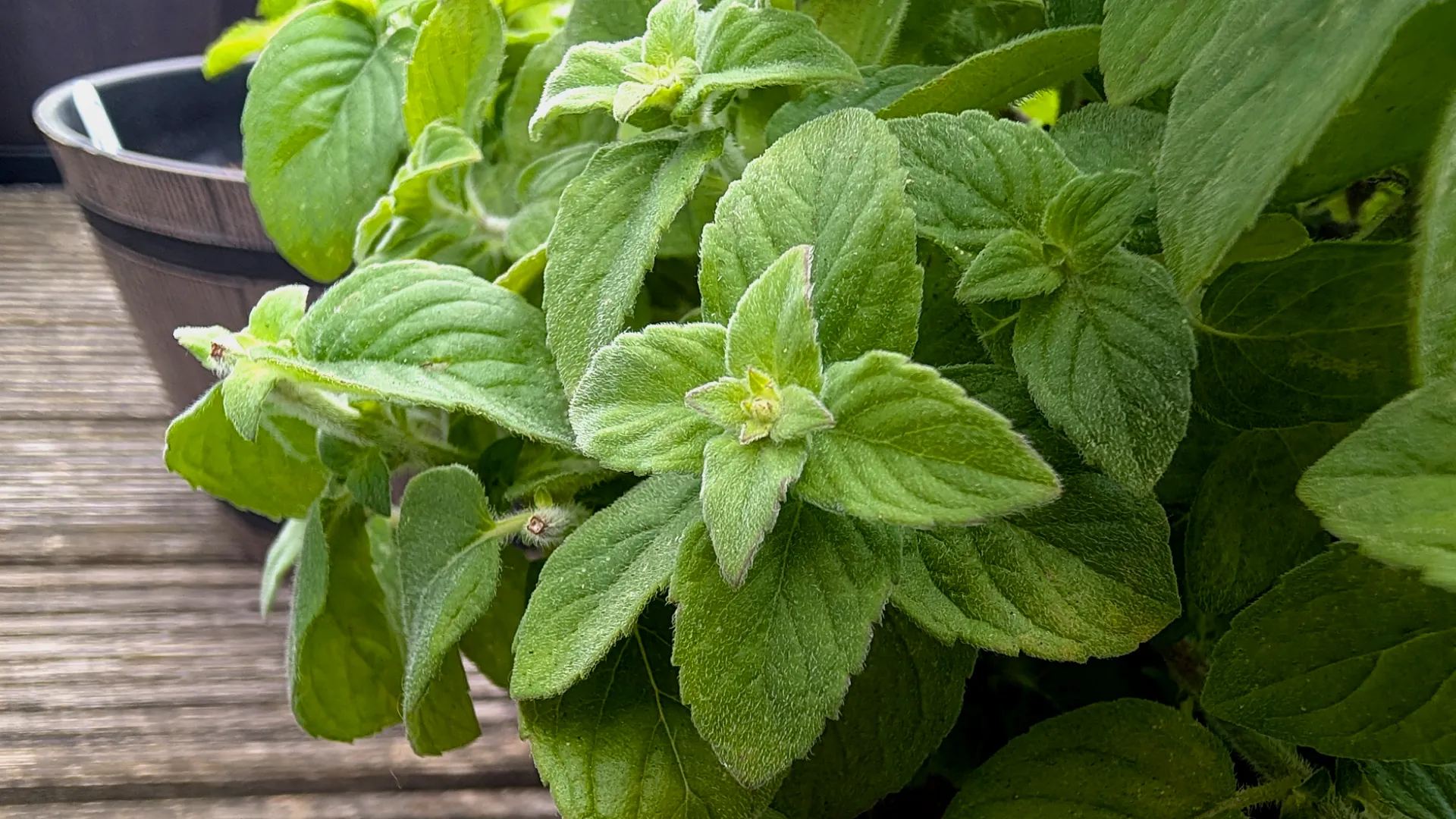
Lemon mint produces a vibrant, fresh lemon scent. Its foliage is bright green, often with a slightly fuzzy texture, and somewhat oval-shaped. This plant also tends to grow compact and upright.
Taste: Sharp lemon with a minty fresh kick
Flowers: Light lilac
Blends: Sweet Citrus
19. Grapefruit Mint (Mentha × piperita ‘Grapefruit’)
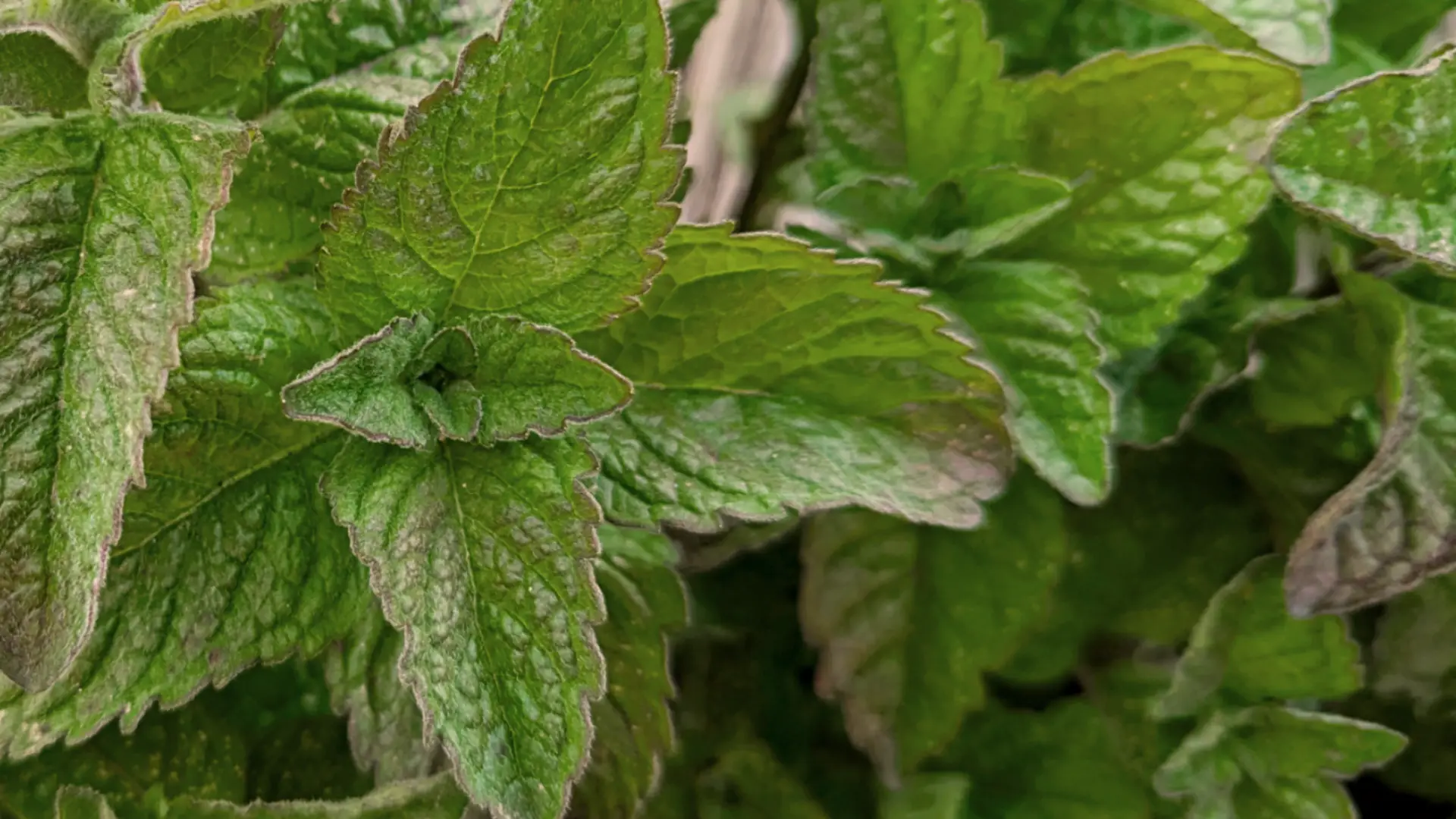
Grapefruit mint carries the bold, tangy essence of grapefruit. The leaves are dark green, occasionally with purplish edges. Like other citrus mints, it is used in aromatherapy to uplift mood using its bright, energising fragrance.
Taste: Zesty, bitter citrus
Flowers: Pale mauve
Blends: Sweet Citrus
20. Garden Mint (Mentha spicata)
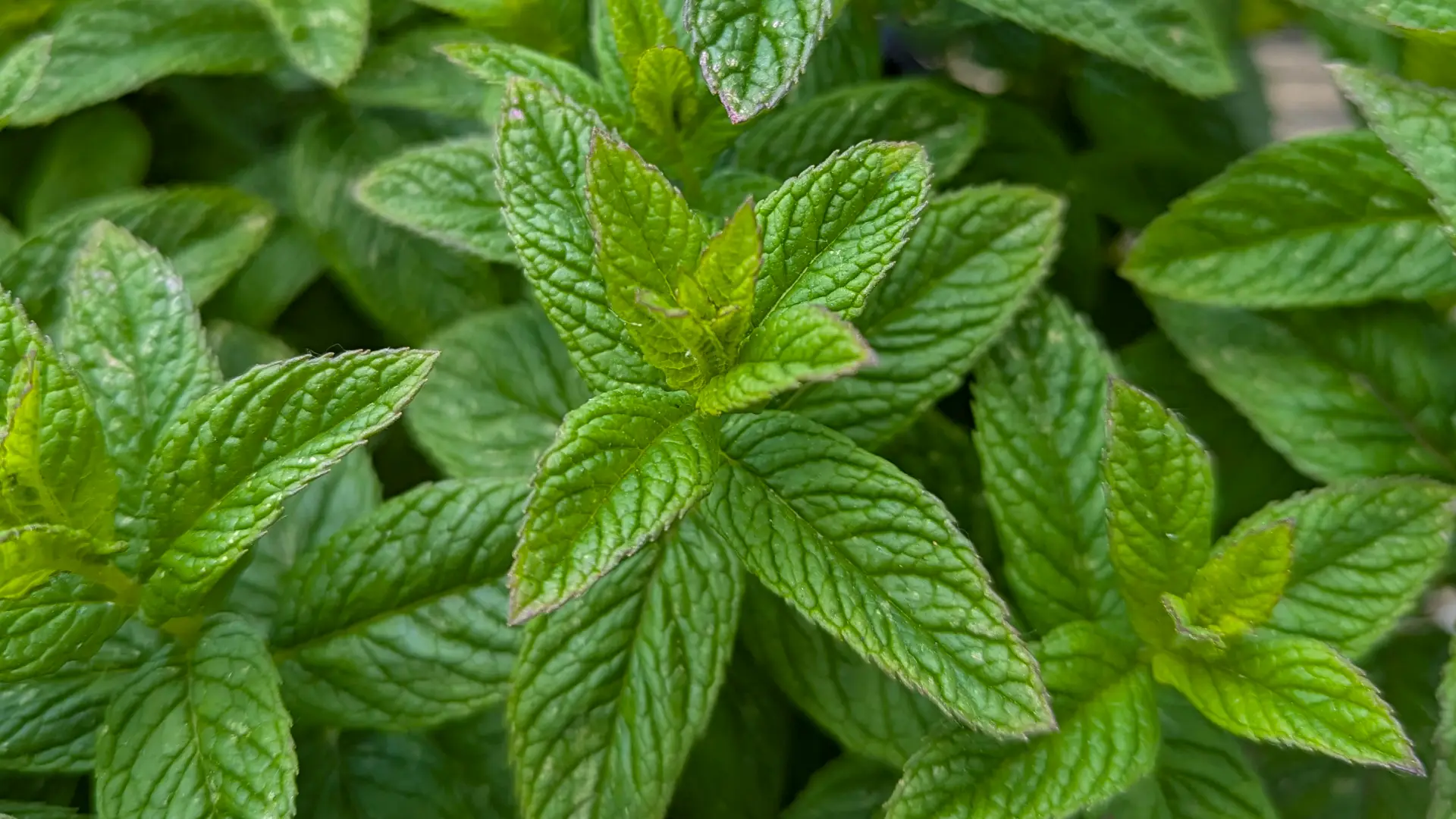
Garden mint is one of the most commonly grown mints in the UK, often found in herb beds and kitchen gardens, though it is typically known by its other name, Spearmint! It also has various other names, such as Common mint, Lamb mint, Spanish mint, and Green mint. It has broad green leaves with a refreshing, classic minty aroma and flavour. Hardy and vigorous, it’s a classic.
Taste: Cool and slightly sweet
Flowers: Light purple
Blends: Sweet Citrus, Pure Mint, and Tropical
Keep the conversation going!
Which mint interests you the most? Have a favourite variety that’s not on our list? Share your thoughts with us on social media @veramint_tea!
*Disclaimer: Botanical naming and classification of mint varieties can vary among sources due to differences in taxonomy, regional naming conventions, and ongoing botanical research. Additionally, the aroma, flavour, growth habit, and appearance of mint plants can vary depending on growing conditions, plant maturity, propagation methods, and the source of the plant. Therefore, some plants may differ from these descriptions depending on these factors.